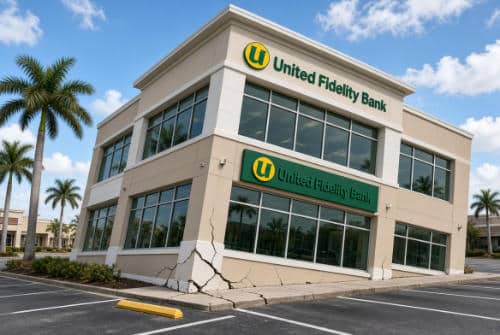
The Affordable Multi-Family Apartments Bank Collapsed
Federal regulators shut down Evansville, Indiana-based United Fidelity Bank on Friday, November 27, 2026, after determining it was in an “unsafe or unsound condition” and likely unable to meet its financial obligations or depositor withdrawal demands.
This is a quick look into what caused the failure. A complete breakdown isn’t available.
Apparently, 121,000 noncurrent apartment loans suddenly morphed into $2.14 billion. Apartment loans grew 54 times while interest rates went up. Odd!
Coincidentally, Citibank overvalued risk assets by more than $35 billion over the summer, but it just dropped.
The bank lent to its own executives and those of the bank’s other companies to buy and build apartments. They were wildly running up debt.
It issued too many affordable mortgages and appeared to be lending to itself. This could be the type of borrowing-and-lending disaster that helped cause the 2008 crisis, but more creative.
Pedcor builds low-income housing. They got most of their loans from United Fidelity Bank. It seems like they hid it, but it caught up with them.
The Debt
First Citizens Bank took on $3.1 billion of United Fidelity’s loans with an approximately $2.6 billion asset discount, signaling heavy stress on the loan book. The FDIC estimated the failure will cost its Deposit Insurance Fund about $1.83 billion—roughly 31% of the bank’s $5.9 billion in assets as of September 30, 2026.
Reports noted a sharp jump in non-accrual or past-due multifamily loans—from $121,000 in Q2 to 70% of the book in Q3—raising concerns over financial reporting accuracy and potential related-party lending.
United Fidelity grew quickly through affordable housing finance ventures and eight bank acquisitions since 2014, drawing regulatory pushback over risk management and growth pace, including a June 2024 Federal Reserve cease-and-desist order over management concerns.
They manage real estate and potentially loaned to themselves.
First Citizens Bank agreed to assume $4.5 billion of deposits and acquire United Fidelity’s assets and 22 branches across Indiana, Illinois, Florida, Colorado, and the U.S. Virgin Islands. Customers retain access to their funds via checks, ATMs, and debit cards, and insured deposits remain protected.