Bill O’Reilly on the National Electoral Rejection of FDR
Bill O’Reilly went back 88 years this week, to 1938, when President Franklin Roosevelt and the Democratic Party got smashed in the midterm vote. The rejection was a national reaction to the prospect of another world war and a weakening economic picture.
Here is the story.
FDR was elected to his second term in 1936. The public overwhelmingly approved of his policies during the Great Depression. Roosevelt carried 46 out of 48 states, winning 60 percent of the popular vote.
However, many people turned on the president as another conflict in Europe grew. In the fall of ’38, 95 percent of the American population opposed entering another foreign war. Seven in 10 believed America’s involvement in the first Great War was a bloody mistake.
On November 8, the voters had their say. Republicans gained 81 seats in the House, seven in the Senate, and 13 governorships. By contrast, Trump lost seven Senate seats and 40 members of Congress.
While Democrats back in ’38 retained control of both houses, the law said FDR could rule without the threat of a congressional veto.
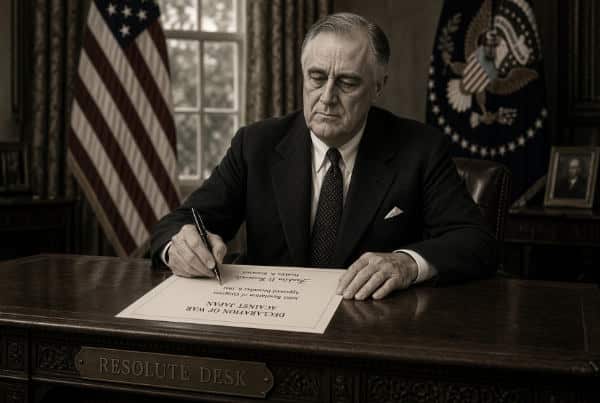
The President’s support fell to the mid-’50s in the polls for the first time since taking office. All that changed in December 1941 when the Empire of Japan attacked Pearl Harbor. Nine in 10 Americans backed Roosevelt; 97% approved of the USA’s declaration of war against Tokyo.
Hitler got in weeks later. In total, Franklin Roosevelt won four presidential elections. He served as commander in chief for 12 years before dying in office at the age of just 63.
And here’s something else you might not know: the lowest voter turnout in U.S. history also happened under President Roosevelt during the 1942 midterms; voter participation plummeted to just 30 percent.
Image: AI Grok